
Environmental Science Magnet Modules
Interactive, classroom-ready Environmental Science Magnet Modules that help students model environmental systems and processes using magnetic manipulatives. Designed to support active learning, these modules allow students to build, move, label, and revise models as they explore matter and energy flow, biogeochemical cycles, and ecological relationships—supported by teacher guides and student handouts.
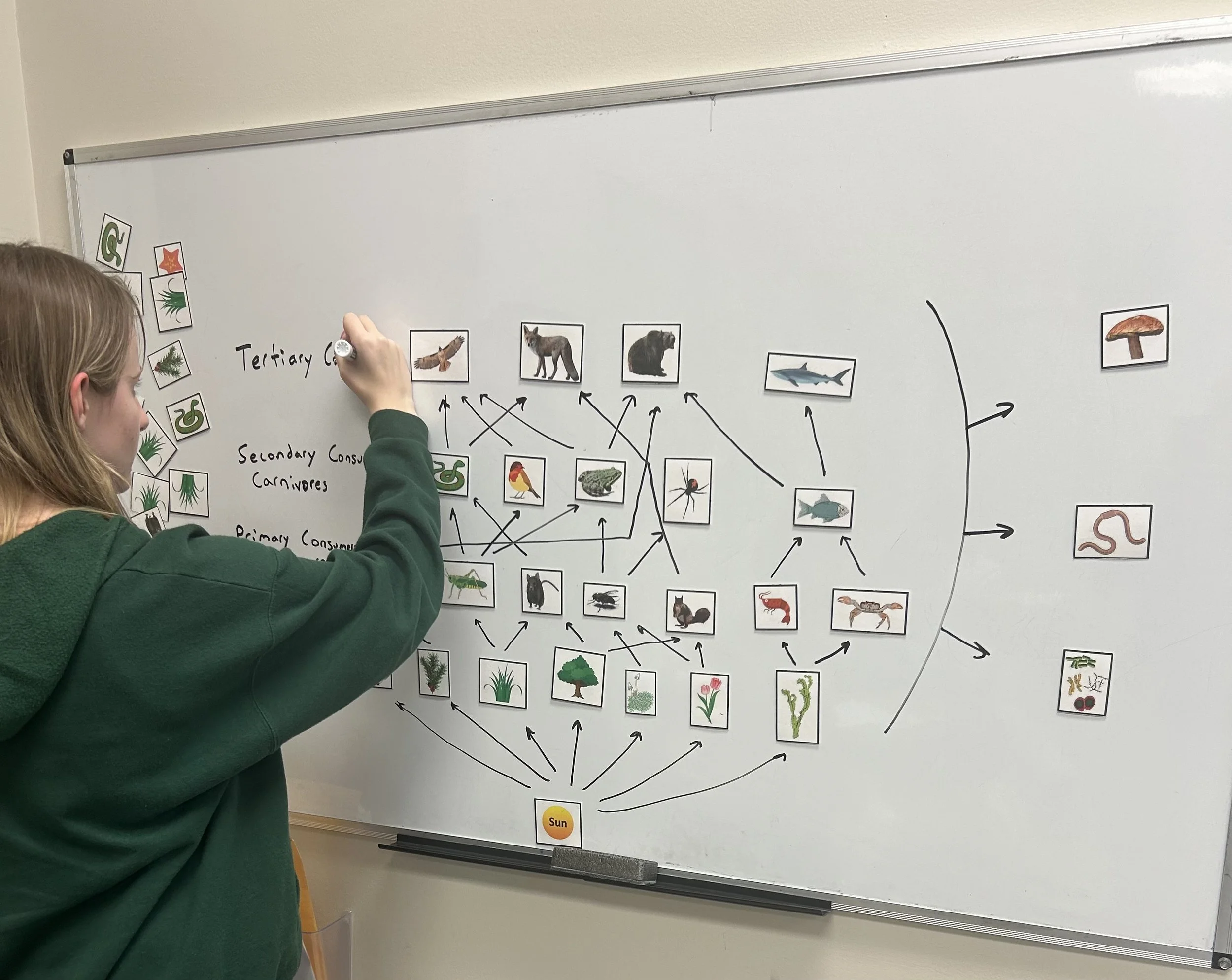
A student using the teacher set for Module ES3 - Food Chains, Food Webs, and Cladograms
Why Environmental Science Magnets Work
Model environmental systems and cycles step-by-step instead of memorizing disconnected facts
Make interactions among matter, energy, and organisms visible through hands-on modeling
Support tracing of processes such as water behavior, biogeochemical cycling, and energy flow
Encourage student discussion, collaboration, and evidence-based explanation of system behavior
Support whole-class modeling at the board and individual or small-group practice
Reinforce environmental science concepts already taught in life science, earth science, and ecology curricula
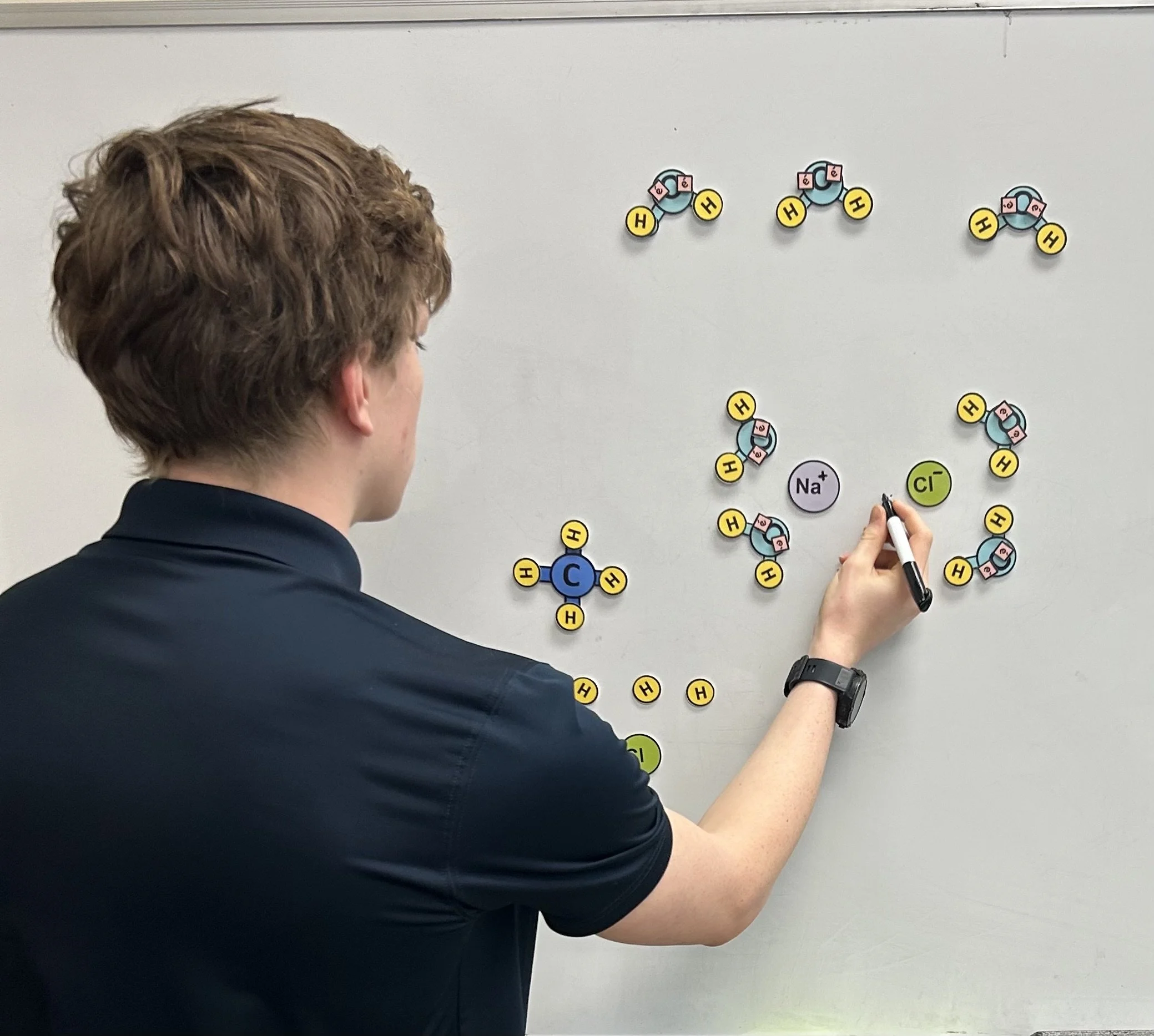
Environmental Science Modules (ES1–ES3)
EdMagZ® Environmental Science Magnet Modules include a sequence of hands-on curricula designed to support environmental science, earth science, and life science instruction across a range of grade levels and courses. Module ES1: Properties of Water, Acids, and Bases focuses on molecular interactions that drive environmental systems, with students modeling hydrogen bonding, solvent behavior, buffering, and pH-related processes that influence natural and human systems. Module ES2: Carbon and Nitrogen Cycles guides students in building and revising models of biogeochemical cycles as they trace the movement of matter through biological, geological, and atmospheric components, exploring processes such as fixation, respiration, decomposition, and nutrient recycling. Module ES3: Food Chains, Food Webs, and Cladograms centers on ecosystem structure and energy flow, with students constructing food chains and food webs, analyzing trophic relationships, and using cladograms to examine patterns of relatedness among organisms. By physically placing, labeling, and revising models, these modules help students connect molecular processes, cycling of matter, and ecosystem interactions into a coherent understanding of environmental systems.
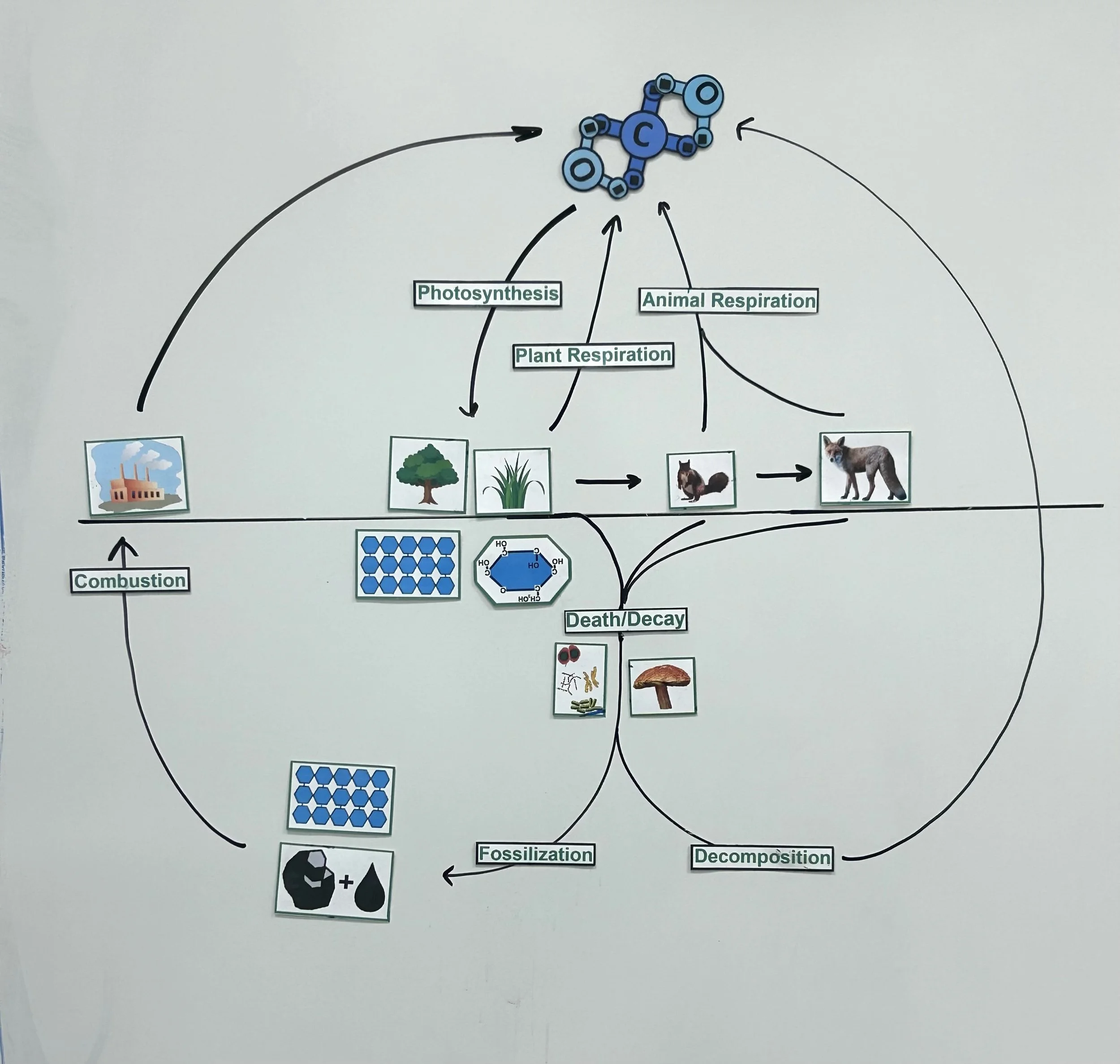
Teacher Sets
Whole-class instruction on a classroom whiteboard
Teacher Sets are designed for whole-class instruction using a standard classroom whiteboard. The larger pieces are easy for all students to see, even from the back of the room.
The components match the Student Sets exactly, allowing teachers to model processes, pathways, and structures on the board while students follow along at their desks. This shared visual language helps reinforce understanding and keeps lessons aligned.
Teacher Sets are ideal for direct instruction, guided practice, and whole-class demonstrations.
Recommended whiteboard size: 36 × 48 inches or larger
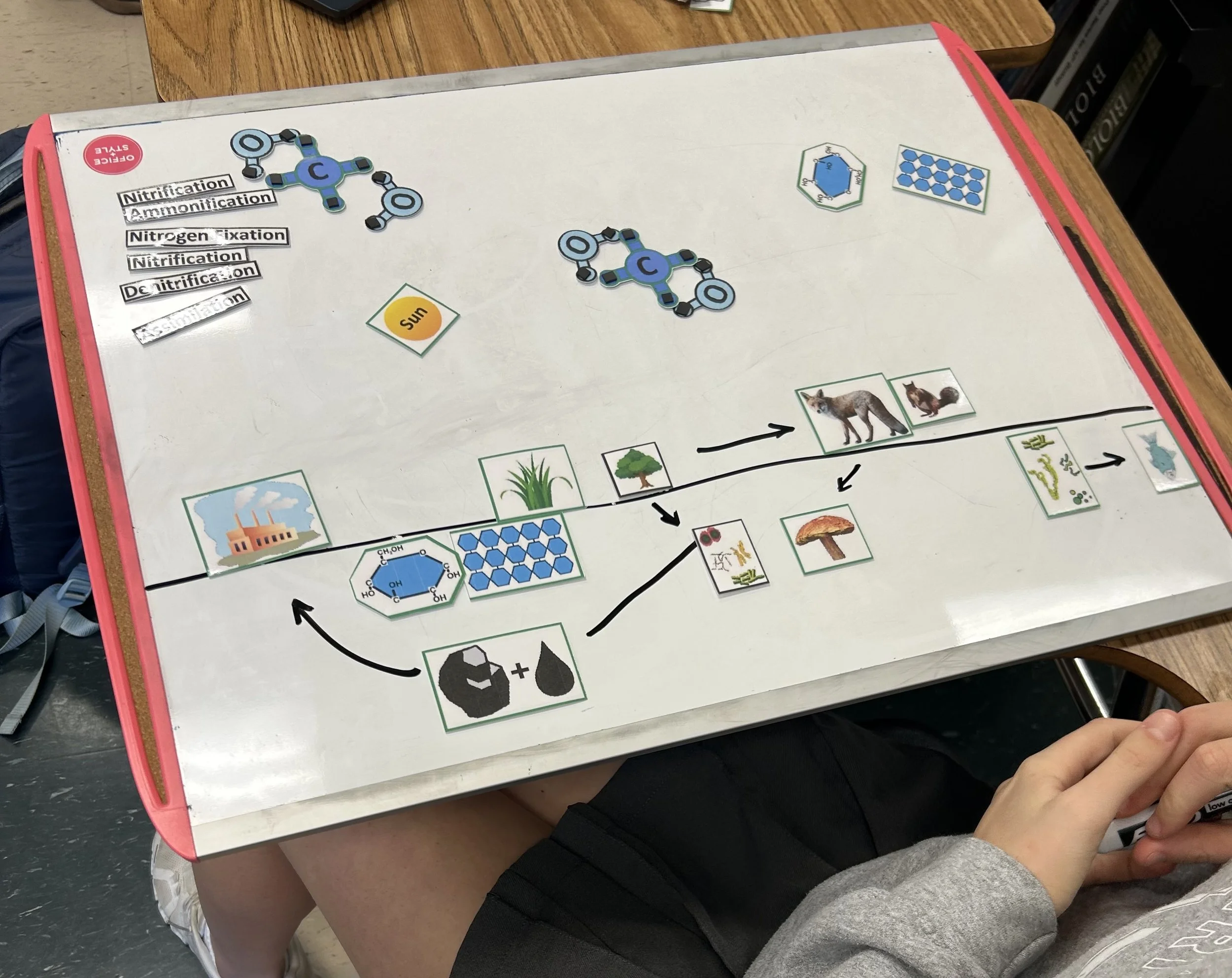
Student Sets
Individual and small-group modeling at desks
Student Sets are scaled for individual or small-group use at desks or tables. They are ideal for partner work, tutoring, stations, and homeschooling.
The pieces match the Teacher Sets exactly—just at a smaller size—so students can mirror classroom models while working at their desks. This alignment allows students to follow demonstrations in real time, build the same models independently, and actively demonstrate their thinking through movement and revision.
Student Set bundles of 6 modules or more receive a 10% discount. Discounted pricing appears automatically in the shop.
Recommended whiteboard size: 18 × 24 inches or larger