Module A3 is a hands-on astronomy curriculum focused on the structure of the nearby universe, from individual galaxies to galaxy groups, clusters, superclusters, and the cosmic web. Using scaled magnetic models and measured distances, students construct physical representations of how matter is organized across vast regions of space.
Students begin by building a scale model of the Local Group, placing the Milky Way, Andromeda, Triangulum, and dwarf galaxies using distance and direction data. The model then expands outward to include nearby galaxy groups and clusters, and finally to superclusters and the largest known large-scale structures. By physically placing these objects, students develop an intuitive understanding of cosmic scale, hierarchical structure, and the immense empty spaces between galaxies.
Instruction emphasizes spatial reasoning, proportional scaling, angular measurement, and the interpretation of astronomical distance data. Extension activities model galaxy motion, mergers, gravitational flows, and the expansion of the universe, reinforcing that large-scale cosmic structure evolves over billions of years.
Teacher sets are designed for classroom whiteboards, while student sets use a reduced scale for small-group and individual work. The module includes three complete lessons with teacher and student guides, figures, and extensions. All magnets arrive in clasp envelopes for organization and long-term durability.
Module A3 is a hands-on astronomy curriculum focused on the structure of the nearby universe, from individual galaxies to galaxy groups, clusters, superclusters, and the cosmic web. Using scaled magnetic models and measured distances, students construct physical representations of how matter is organized across vast regions of space.
Students begin by building a scale model of the Local Group, placing the Milky Way, Andromeda, Triangulum, and dwarf galaxies using distance and direction data. The model then expands outward to include nearby galaxy groups and clusters, and finally to superclusters and the largest known large-scale structures. By physically placing these objects, students develop an intuitive understanding of cosmic scale, hierarchical structure, and the immense empty spaces between galaxies.
Instruction emphasizes spatial reasoning, proportional scaling, angular measurement, and the interpretation of astronomical distance data. Extension activities model galaxy motion, mergers, gravitational flows, and the expansion of the universe, reinforcing that large-scale cosmic structure evolves over billions of years.
Teacher sets are designed for classroom whiteboards, while student sets use a reduced scale for small-group and individual work. The module includes three complete lessons with teacher and student guides, figures, and extensions. All magnets arrive in clasp envelopes for organization and long-term durability.

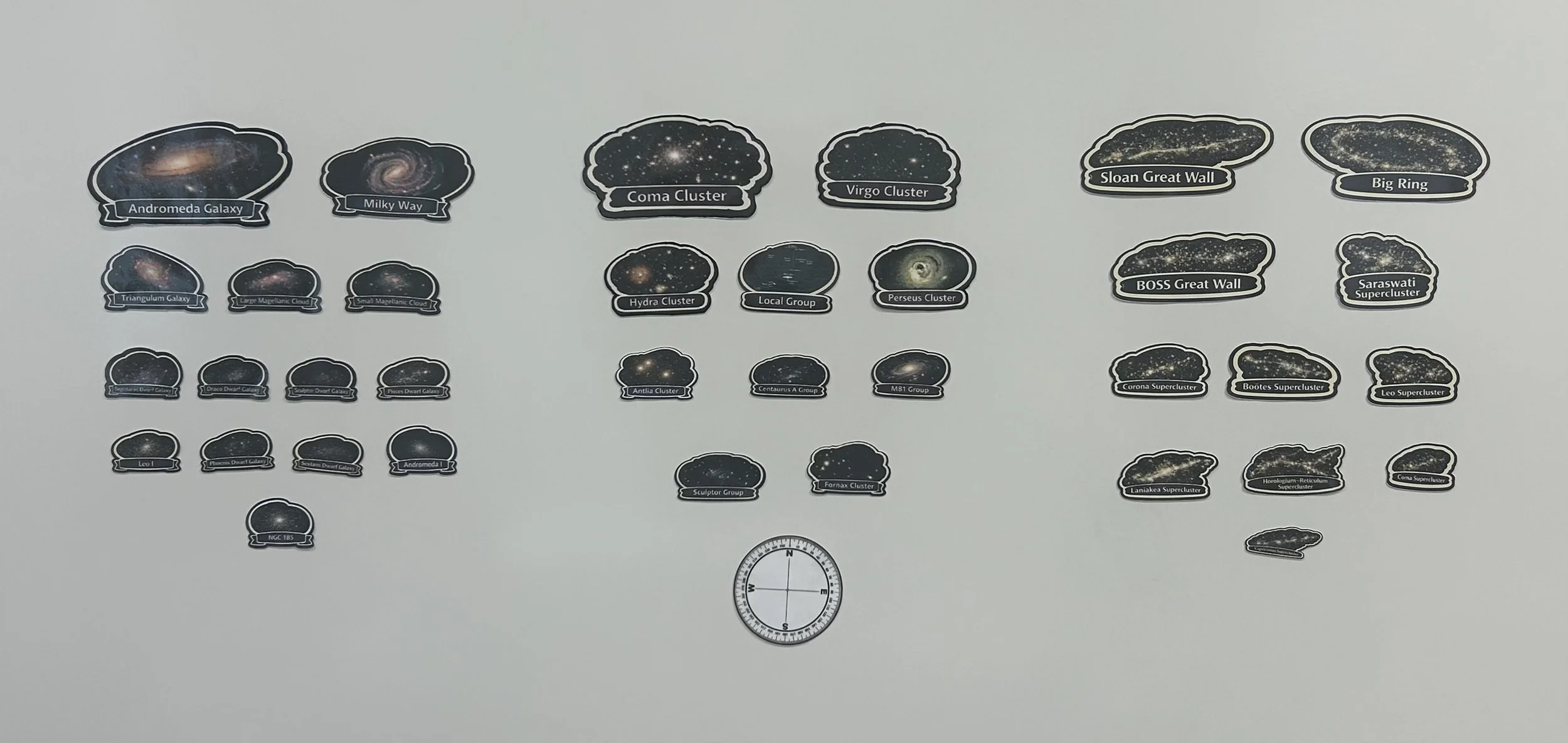 Image 1 of 15
 Image 2 of 15
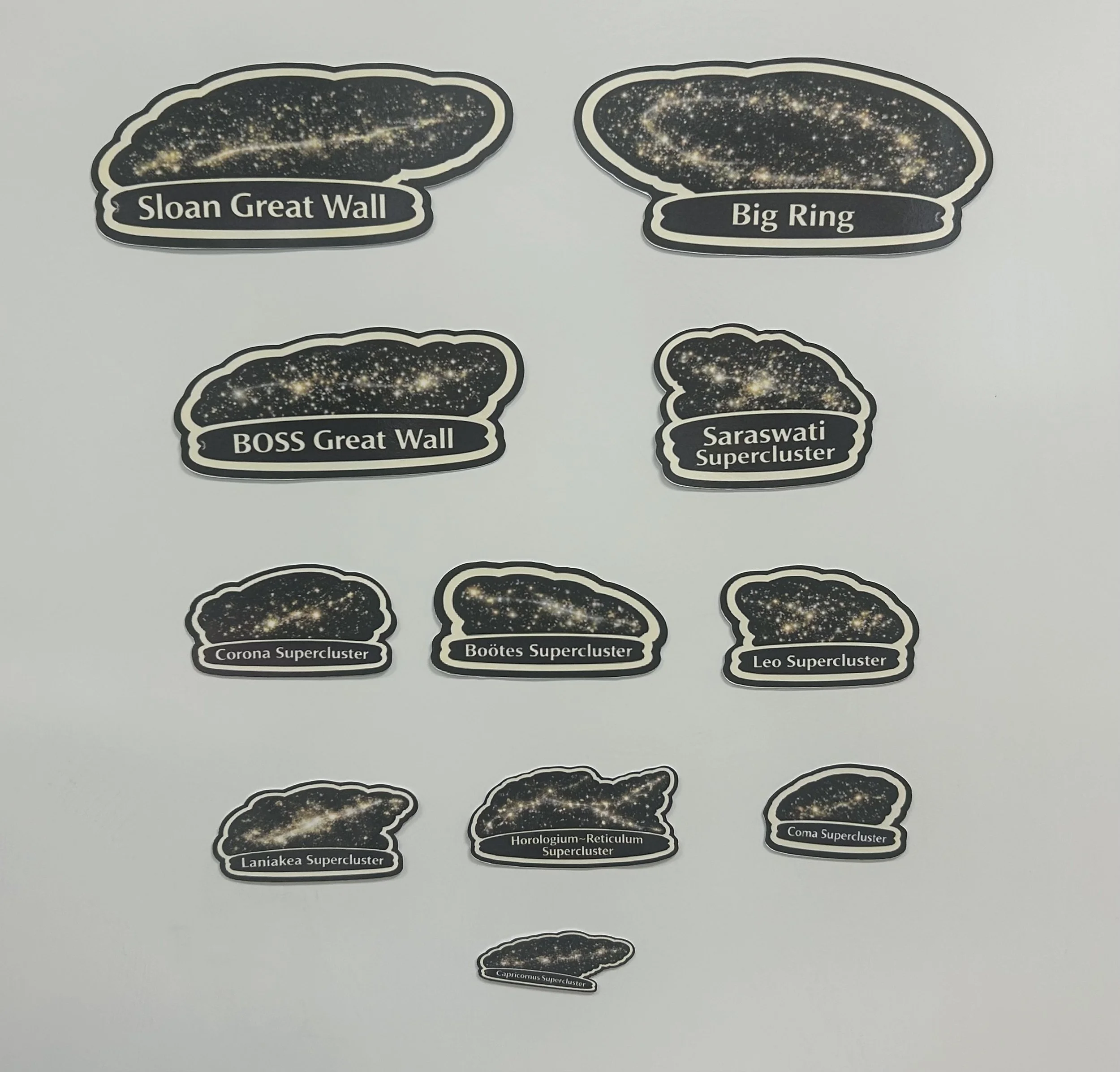 Image 3 of 15
 Image 4 of 15
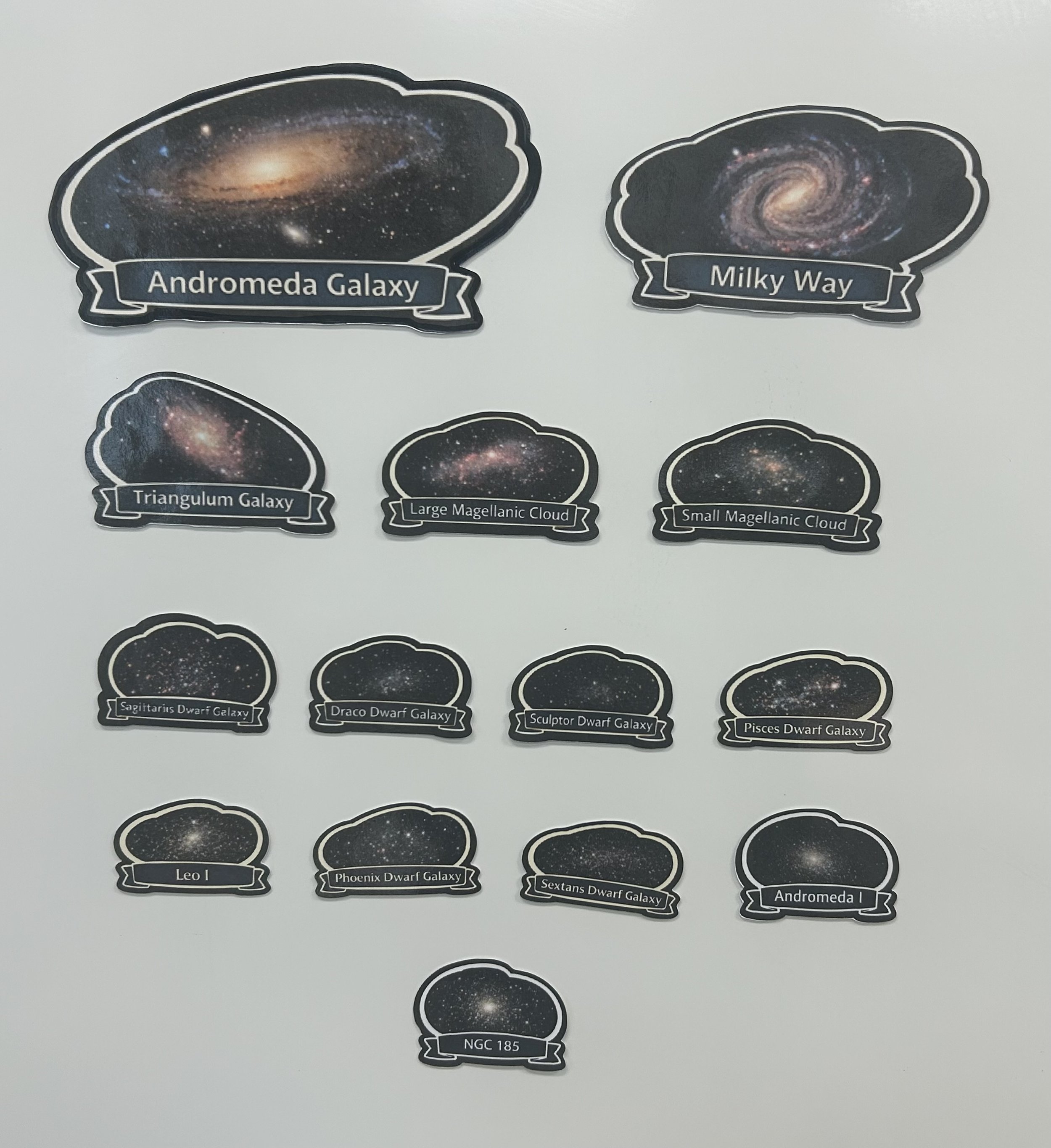 Image 5 of 15
 Image 6 of 15
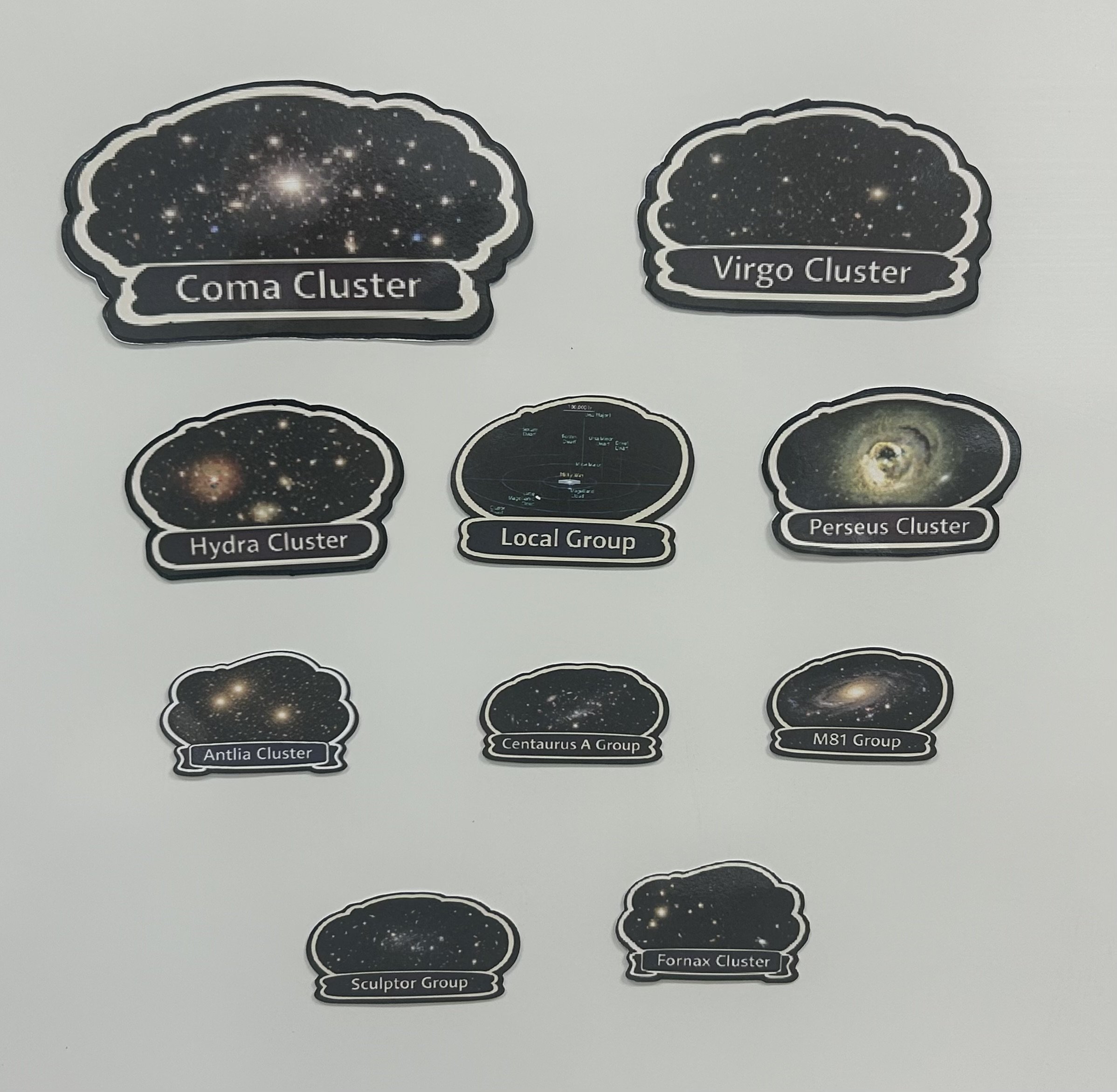 Image 7 of 15
 Image 8 of 15
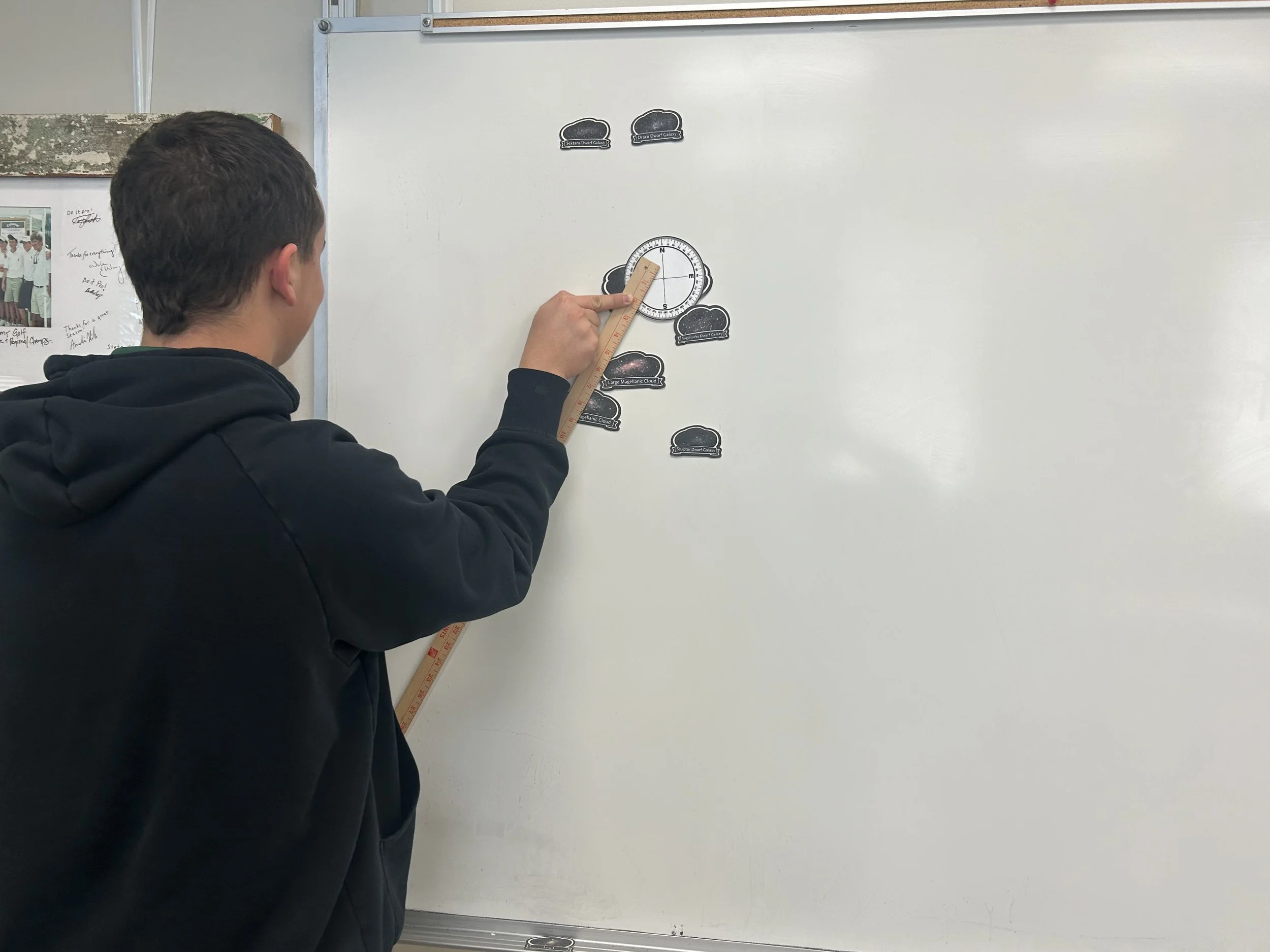 Image 9 of 15
 Image 10 of 15
 Image 11 of 15
 Image 12 of 15
 Image 13 of 15
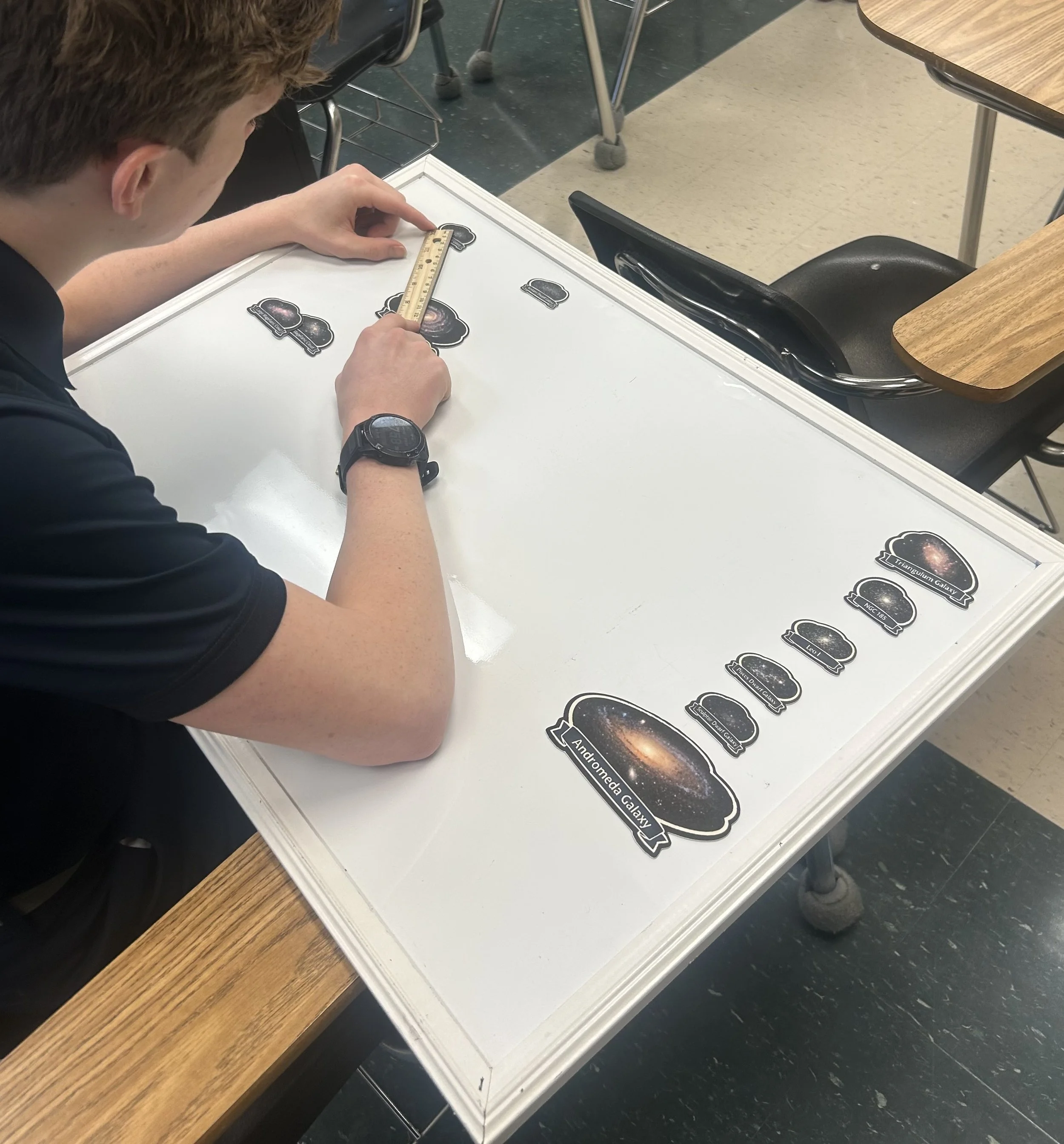 Image 14 of 15
 Image 15 of 15